Key takeaways
- Coinkite tells affected Coldcard users to generate entirely new seeds and move their funds after installing fixed firmware.
- Block includes Mk4, Q, and Mk5, which challenges Coinkite's initial assessment that those models were unaffected.
- Updating firmware or importing an affected seed into another wallet does not restore the missing entropy.
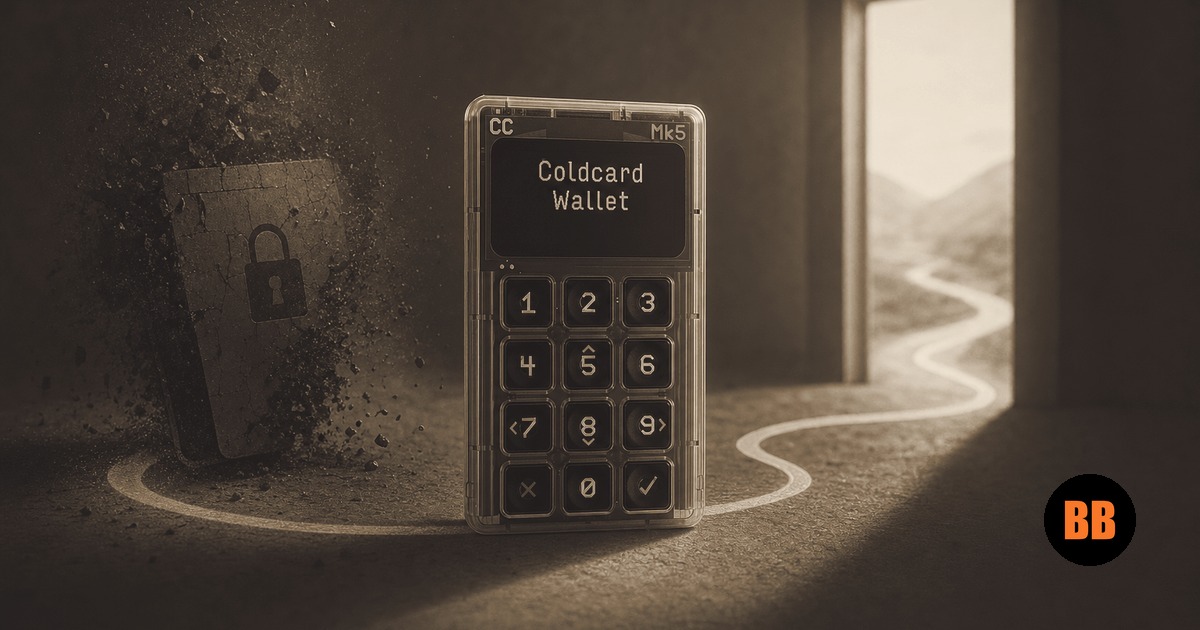
A July 30 sweep moved about 594.5 BTC from 500 addresses that used a single signature, supporting the theory that the keys involved were weak. Coinkite issued urgent guidance: users with affected Coldcard seeds should create completely new seeds and move their funds. Block independently identified Mk4, Q, and Mk5 as affected (a wider and more severe model scope than the initial Coinkite assessment).
The seed is what actually needs replacing
Coinkite said users should install fixed firmware before generating a replacement seed, then create a completely new seed and migrate the funds. Updating the device protects future seed generation. It does not repair a seed already generated by affected firmware.
Moving that same seed to different hardware is not a fix either. Block said importing the insecure seed into another wallet leaves it affected, because the missing randomness is already embedded in the seed itself. The seed itself is the compromised asset, not merely the device that first displayed it.
Coinkite estimates about 72 bits of effective search space for affected Mk4, Q, and Mk5 seeds. Block argues that at most 2^32 output streams are securely distinguished once the fallback state and call history are fixed. Those are separate measurements and should not be blended into one number.
Randomness is the security boundary
A wallet seed is supposed to come from an entropy source large enough to make guessing infeasible. When generation draws from a bounded search space, an attacker can search candidates instead of confronting the full security margin users expect. A wallet that looks legitimate can therefore begin life with a secret that is far easier to recover than advertised.
The same onchain report supports the theory of a weak key without proving that every swept wallet used a Coldcard, or that one device family explains the entire theft.
The practical response is narrower than the attribution debate, and clearer. Install fixed firmware, generate a new wallet with sound entropy, verify the receiving wallet, send a test transaction, and move the funds. Reusing the old seed, even on newer hardware, preserves the original weakness.
Why It Matters
For Bitcoin self-custody, an affected Coldcard seed stays risky even after the same seed moves to different hardware. Firmware can improve future generation, but it cannot add missing randomness to an old seed, and it cannot make that seed safe in another wallet. Affected users need a clean break: a newly generated wallet, a verified receiving address, a test transaction, and a complete fund migration. Treating the seed as the affected asset stops a cosmetic device upgrade from being mistaken for a security repair.