Key takeaways
- The Linux Foundation launches x402 with 40 members spanning payments, cloud infrastructure, commerce, and open source governance
- Coinbase contributes the protocol under an Apache license, while Cloudflare tests stablecoin payments and keeps Lightning support exploratory
- Lightning Labs offers L402 agent tooling that settles over Bitcoin without placing a stablecoin issuer in the payment path

An open standard gets serious distribution
The Linux Foundation declared the x402 Foundation operational on July 14, 2026, giving a web payment protocol born at Coinbase a neutral governance home. The foundation launched with 40 member organizations spanning finance, cloud infrastructure, payments, and commerce, among them Amazon Web Services, Google, Stripe, Visa, Mastercard, Cloudflare, Circle, and Coinbase.
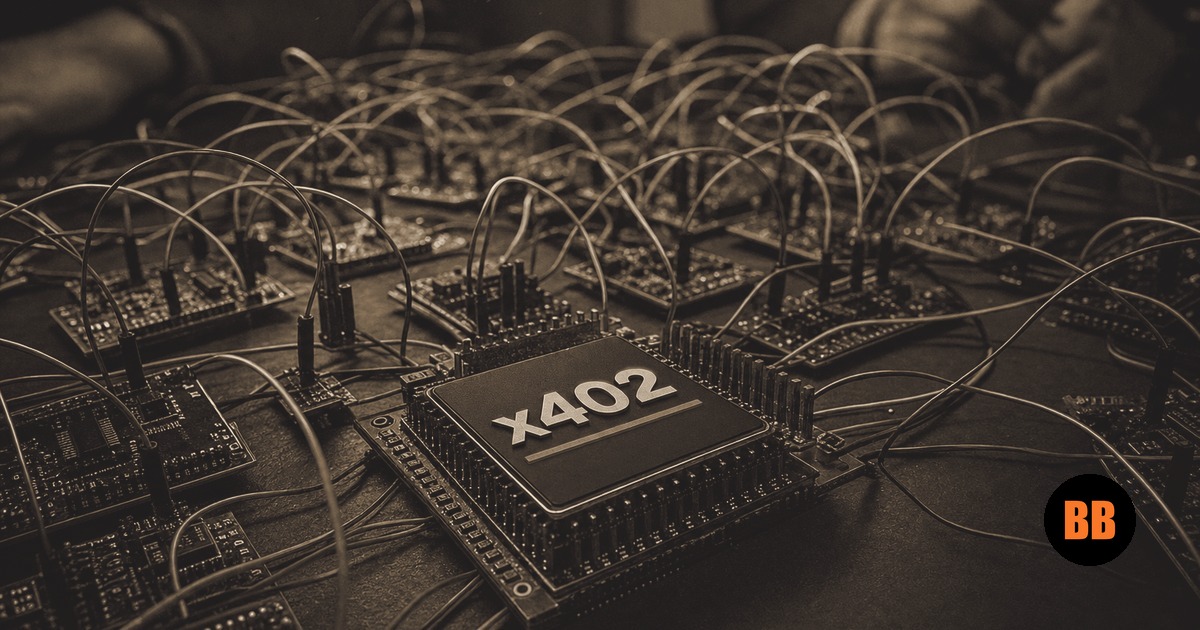
x402 revives the Hypertext Transfer Protocol (HTTP) 402 Payment Required status code. A service can respond to an automated request with a price and payment instructions, an agent can pay, then retry the request without creating an account or entering card details. Coinbase contributed the protocol to the Linux Foundation, and its reference implementation carries an Apache 2.0 license.
"AI agents and automated systems are becoming active participants in the global economy, yet they have lacked a native, secure way to transact," said Jim Zemlin, chief executive officer of the Linux Foundation.
The standard can support multiple payment types, from traditional cards to stablecoins. That flexibility matters because the specification does not require developers to use one company, token, or settlement network.
The deployment still picks winners
Open code does not make every implementation equally resistant to control. Cloudflare opened a waitlist for a Monetization Gateway that lets websites charge agents per request through x402. The announced product supports stablecoin settlement, while Bitcoin and Lightning support remain exploratory.
That leaves a gap: the protocol was built to favor no vendor, but the money rails reaching users today still can. A stablecoin issuer can freeze balances, and the chain operator or facilitator can impose access rules. The standard may be open, but a payment still inherits the properties of whatever asset and network carry it.
Lightning Labs has taken a different route with L402, which also uses HTTP 402 but settles payments over the Lightning Network. Its 2026 agent tooling lets software pay for application programming interfaces (APIs) gated behind L402, and lets developers host paid endpoints of their own. It has less corporate distribution than x402. Its settlement asset, though, does not depend on a dollar token issuer.
Why It Matters
Machine payments will reward the rail that developers can integrate quickly and users can trust under pressure. x402's governance and distribution make it formidable. Yet vendor neutrality at the protocol layer cannot neutralize a freezeable asset, while Bitcoin gives agents bearer money and Lightning gives them the speed automated services need. The real contest is whether builders can make tooling native to Bitcoin as easy to deploy as the stablecoin stack (so an open payment standard ends up carrying sovereign money instead of wrapping corporate dollars in code that happens to be open source).