Key takeaways
- Chun Wang cofounded F2Pool in 2013 and built wealth through Bitcoin mining infrastructure, now one of the largest pools.
- SpaceX says Wang will join a Starship mission lasting two years, with a Mars flyby.
- Decrypt notes Starship has not reached orbit or carried astronauts, with no launch date set.

Bitcoin Mining Money Goes Interplanetary
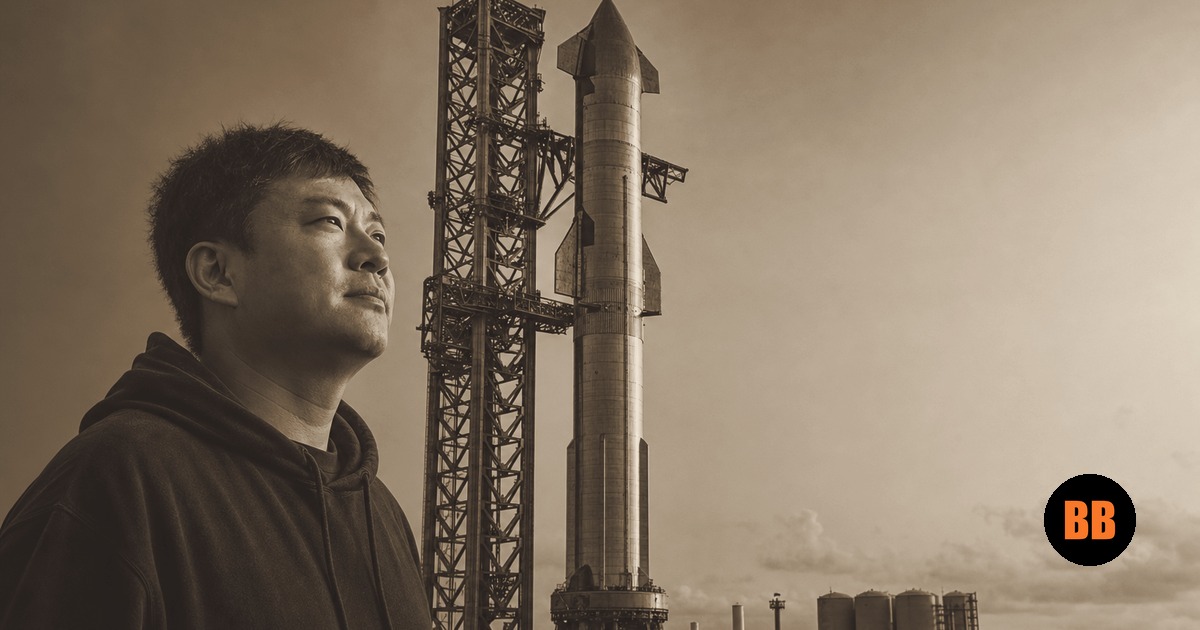
F2Pool cofounder Chun Wang is set to join SpaceX's first planned human spaceflight mission to Mars, a Starship trip lasting two years that would fly by the planet and return to Earth. The Block reported that Wang will board Starship for the mission after already commanding Fram2, SpaceX's first crewed polar orbit mission, in 2025.
Cointelegraph described Wang as a Maltese entrepreneur born in China who founded F2Pool in 2013. F2Pool remains one of the world's largest Bitcoin mining pools, with Cointelegraph citing mempool.space for a market share above 11.85%. The Block's indexed article cited Hashrate Index at about 11.5% (close enough to make the point without pretending that a mining pool's share of the market stays fixed).
The important detail is where the money came from. Wang's public profile is tied to Bitcoin mining infrastructure. It has nothing to do with a token promoted late in a market cycle, or an exchange mascot role. He helped build one of the industrial rails that secured blocks and pooled hashrate when Bitcoin was still far from a Wall Street asset class.
Fram2 Was the First Act
Wang is not new to this, and he is not just a wealthy tourist who bought a ticket. In April 2025, he funded and commanded Fram2, a private SpaceX Crew Dragon mission that flew over Earth's poles with crewmates Rabea Rogge, Jannicke Mikkelsen, and Eric Philips. Decrypt reported that the crew were the first four humans to fly over the poles.
SpaceX's newer announcement puts Wang on a much more ambitious path: a Starship mission that goes beyond Earth and the Moon, a Mars flyby, and a return to Earth. Cointelegraph said Wang also bought a ticket for a planned weeklong commercial Starship flight around the Moon before the Mars mission.
An Announcement Rather Than a Departure
The story also lands differently because Wang already flew. Fram2 gives him a real spaceflight credential, more than a press photo beside a rocket. That matters when separating a speculative Starship schedule from the narrower fact that a Bitcoin mining founder has become a repeat private astronaut customer.
The timeline deserves cold water. Decrypt noted that SpaceX has not announced a launch date, and Starship has not yet reached orbit or carried astronauts. Cointelegraph said SpaceX cargo flights to Mars are expected no earlier than 2028, while Decrypt noted earlier comments that human landings could come as early as 2029.
That makes this a symbolic announcement. Nobody is boarding imminently. The technical leap from Starship tests to a crewed Mars flyby is enormous, and the missing date matters. The mission could slip for years, change shape, or never leave the ground in its current form. Still, the funding source is what stands out: early mining infrastructure created wealth that is now buying frontier science and spaceflight optionality.
Why It Matters
Fiat fortunes usually buy stadium names, political access, or another loop that extracts rent instead of creating value. Early Bitcoin mining wealth is now underwriting a private Mars flyby. That does not make the mission close, easy, or guaranteed. It does show how permissionless money changes the patron class. Build the network early enough, and your optionality can stretch far beyond the planet. At bottom, this is capital formation outside the banking permission stack. Bitcoin mining rewarded infrastructure risk, and that reward is now funding a frontier bet no committee would have approved.