Key takeaways
- FinCEN bars US financial institutions from processing funds transfers involving Mexc Global, cutting it off from US finance.
- Treasury says Mexc Global facilitated at least $16B in illicit transactions tied to Iran, North Korea and Russia.
- The Mexc Global order takes effect 30 days after Federal Register publication and is not a sanctions designation.

Treasury Draws a Line
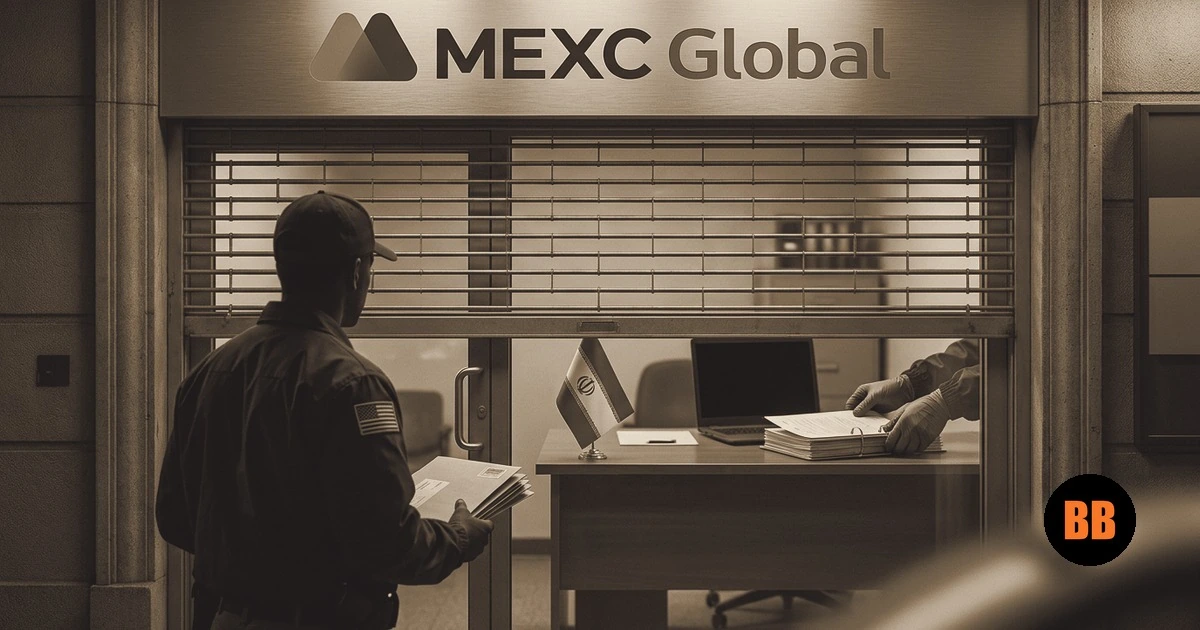
The US Treasury's Financial Crimes Enforcement Network (FinCEN) issued an order cutting Mexc Global off from the US financial system, barring US financial institutions from processing funds transfers involving Mexc Global. Treasury says Mexc Global facilitated at least $16B in illicit transactions between May 2021 and May 2026 connected to Iranian, North Korean and Russian sanctions evasion, as well as cybercrime.
Treasury Secretary Scott Bessent framed the order as a choice for every institution that touches the exchange.
"Financial institutions cannot have it both ways: Either you support the Iranian regime, or you have access to the U.S. financial system."
Where Treasury Says the Money Went
Treasury says nearly $1.5B of the Mexc Global flows was tied to Russian sanctions evasion. About $1B came from direct transactions with more than 40 Iranian exchangers, according to Treasury.
Treasury says about $22M of the Mexc Global flows went to the sanctioned Central Bank of Iran and the Islamic Revolutionary Guard Corps and its Qods Force. Almost $200M was tied to the A7A5 stablecoin, according to Treasury.
Treasury says that as of September 2026, Mexc Global processed more than $1B in daily transactions and maintained approximately $5B in reserves.
An Order, Not a Sanction
The Mexc Global order is a FinCEN funds-transmittal ban under section 9714(a) of the Combating Russian Money Laundering Act, not an Office of Foreign Assets Control sanctions designation. It does not modify existing obligations under the Bank Secrecy Act.
The order takes effect 30 days after publication in the Federal Register, and the Federal Register's public index still showed no Mexc document when the order was announced.
In June, Treasury sanctioned Nobitex, Iran's largest exchange, after saying it processed more than half of Iran's crypto inflows in 2025. In September, the US sanctioned Iranian exchange BitBank over alleged bitcoin transfers to the Islamic Revolutionary Guard Corps.
Why It Matters
The Mexc Global order follows June's sanctions on Nobitex and September's action against BitBank, and we read it as an escalating Treasury push against bitcoin-related sanctions evasion that lands hardest on ordinary customers who left coins with an exchange. Anyone holding funds on Mexc should treat withdrawal as urgent, because a custodial balance lasts only as long as the gatekeeper keeps its banking access, and Treasury just showed that access can vanish with one order. Self-custody is not paranoia but a practical necessity: coins under your own keys keep settling on Bitcoin no matter which exchange loses its counterparty standing.