Key takeaways
- Foundry asks mining pool clients to vote on BIP-110 through a published process that weights each vote by hashrate.
- Each participating Foundry client's ballot reflects its average hashrate measured across the preceding 10 days of mining.
- Foundry requires more than 51% support and counts every client that stays silent as a No vote.

Foundry asked its mining pool clients to vote on whether the pool should signal support for Bitcoin Improvement Proposal 110 (BIP-110). Each participant's vote is weighted by its average hashrate over 10 days, which ties influence to the mining work routed through Foundry.
The pool will begin signaling Yes only if more than 51% of voting hashrate supports BIP-110. Foundry counts clients who do not respond as No votes, so the proposal must win affirmative support from a majority of the measured voting hashrate.
Hashrate Sets the Weight
The ballot is not one client, one vote. Each participant's vote is weighted by its average hashrate over 10 days, so that measurement ties each ballot directly to the mining work routed through Foundry.
Foundry will begin signaling Yes only if more than 51% of voting hashrate supports BIP-110. If the Yes vote does not cross that threshold, the pool does not begin signaling support under its published process.
Foundry counts a client that does not respond as a No vote in the BIP-110 client vote and in the BIP-110 process.
The Largest Pool Consults Clients
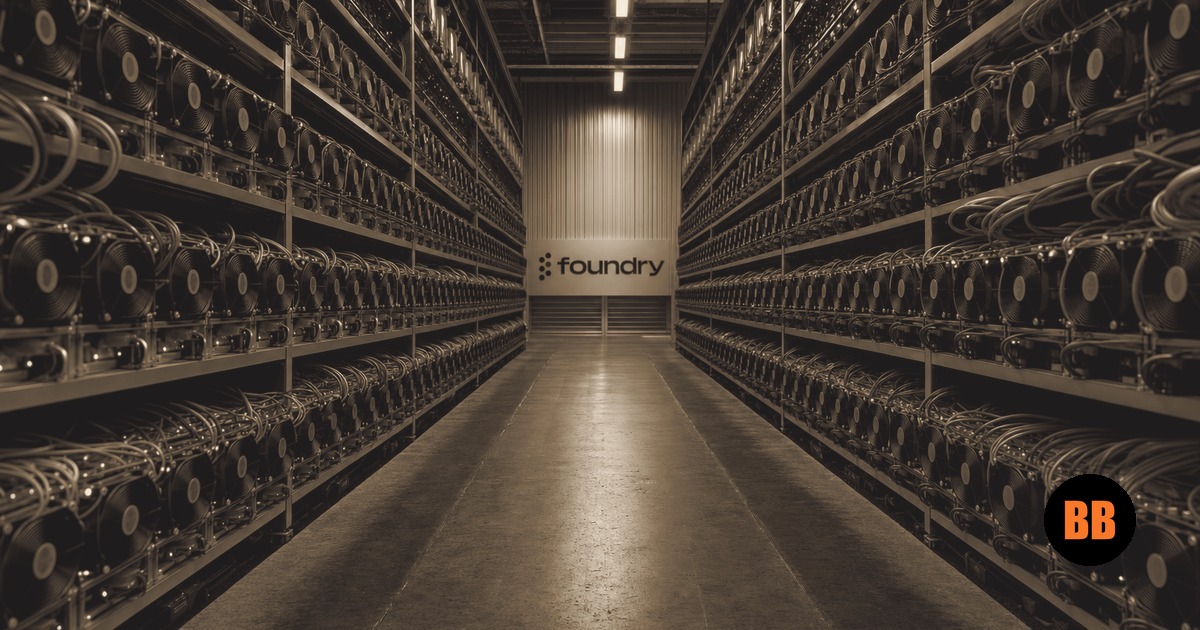
Foundry controls about one third of Bitcoin's network hashrate, and is generally described as the largest mining pool by hashrate. Its signal can therefore represent a substantial share of daily blocks, which makes the client ballot consequential, not just an ordinary internal survey.
The vote still governs Foundry's signal rather than Bitcoin's rules by itself. Miners and node operators across the network retain their own roles, while the pool has published a specific method for deciding what its blocks will signal.
That method is unusually explicit. Foundry is running a vote weighted by hashrate among its mining pool clients on whether to signal support for BIP-110, a published process for the largest pool by hashrate. It requires more than 51% support before signaling Yes, and treats silence as a No vote.
Why It Matters
Foundry will signal Yes for BIP-110 only when more than 51% of voting hashrate supports it. Silence counts against it, the same as a No vote. Those published thresholds make the largest mining pool's own decision measurable, without pretending one pool's vote settles Bitcoin's broader protocol debate.
The process also exposes where influence actually sits: clients direct hashrate to Foundry, Foundry converts that weight into a signaling choice, and the wider network decides what rules it will enforce. Clear thresholds do not eliminate politics, but they make the pool's coordination visible instead of opaque.