Key takeaways
- ZachXBT names French banking group Crédit Mutuel Arkéa as the alleged victim of a theft topping $133M.
- Kraken and Crypto.com restrict accounts and block funds linked to the alleged theft, while the bank stays silent.
- Bitquery finds about $63M in stablecoins converted into Ether within roughly four hours of the withdrawals.

An Onchain Trail Points to a French Bank
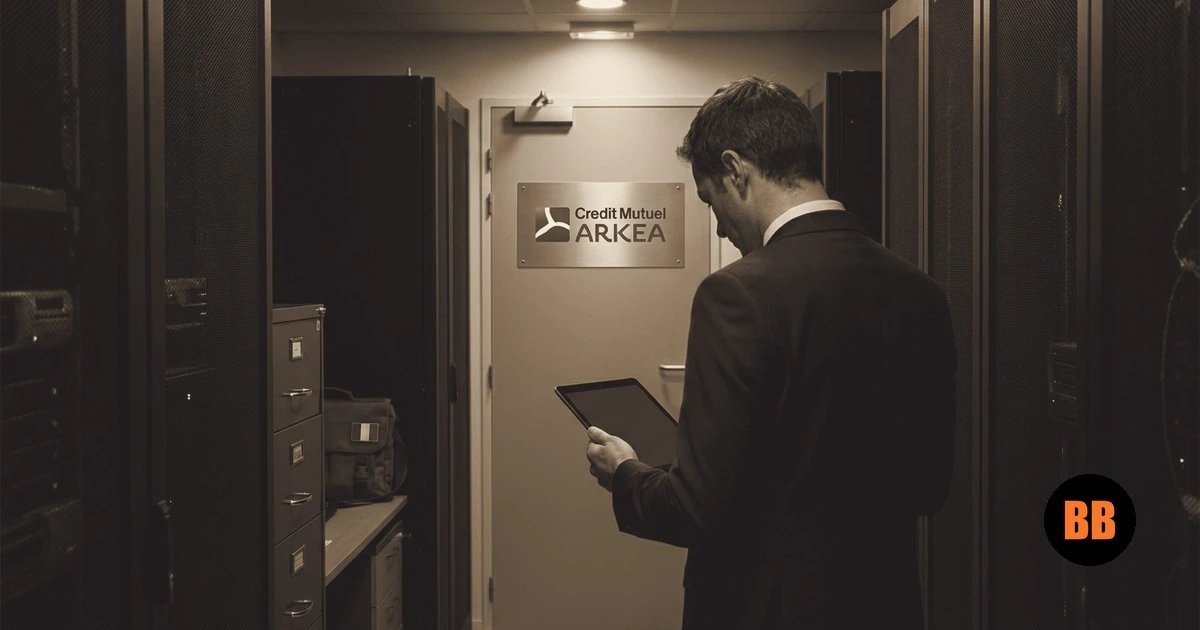
Onchain investigator ZachXBT has named French banking group Crédit Mutuel Arkéa as the alleged victim of a theft exceeding $133M, pulled through centralized exchange accounts. The pseudonymous investigator described the group as holding about $235B in assets and said it was allegedly exploited over multiple days.
Crédit Mutuel Arkéa has not issued any public statement confirming or denying the incident, and the claims rest on ZachXBT's own analysis, unverified by the bank or authorities. ZachXBT has not disclosed how the attackers gained access to the funds.
From $106M to $133M
ZachXBT first flagged over $106M in suspicious withdrawals from centralized exchanges, then raised his estimate above $133M after finding another $27M, some of it withdrawn after his initial warning. He suspects the real total is larger once over-the-counter activity is counted.
ZachXBT said the attacker was swapping funds into Ether and Monero through instant exchanges and bridges, in laundering patterns that did not match those typically used by North Korea's Lazarus Group.
Blockchain analytics firm Bitquery traced the withdrawals to accounts at Kraken, Crypto.com and other exchanges. It found that about $63M in stablecoins was converted into Ether within roughly four hours.
Exchanges Freeze Accounts While the Bank Stays Quiet
Kraken said the incident did not originate on its platform and that its systems and customer accounts were not compromised. Kraken and Crypto.com both said their platforms remained secure.
"We've restricted the accounts in question and are working with law enforcement to support recovery efforts."
A Crypto.com spokesperson said the company had "taken appropriate action to block any funds associated with this third-party incident." ZachXBT said he has a high degree of confidence the attacker is not Lazarus. His working theory is that a large Western European financial institution was exploited and is covering it up. He also said the lack of a proper incident disclosure allowed more than $30M to be laundered, claiming EU law enforcement could otherwise have frozen the funds.
Why It Matters
Every withdrawal traced so far left centralized exchange accounts, where custody sits with intermediaries who can lose funds, freeze them or stay silent while an outside investigator does the disclosure for them. If ZachXBT's account holds up, that is the custodial model failing rather than Bitcoin, and the freeze buttons that slowed this thief can be pressed against any ordinary account holder while a silent custodian buys the attacker time. That is why self-custody matters: it keeps your keys out of a bank's security budget and out of its public relations strategy. Bitcoin held in your own wallet needs no permission, no compliance desk and no cover story, and nobody can freeze it while a bank decides what to admit.