Naiw Nakamoto
October 22, 2026
Newsletters
France Targets DeFi 🇫🇷, Treasury Backs Down 🇿🇦, Suit Hits Coldcard ⚖️
France's AMF, ACPR, Banque de France and Treasury want platforms liable for client losses from DeFi security failures.

Proof of Press
October 22, 2026 • Reading Time: 9 minutes

Together with

Greetings Bitcoiner,
Welcome to Issue #683 of Bitcoin Breakdown, where every Tuesday and Thursday, we bring you the latest must-read Bitcoin thought leadership articles and the newest tools and projects you should know about. But first, today’s Top Stories:
French regulators want platforms liable for decentralized finance incidents affecting clients, South Africa's Treasury will rewrite its draft rules on moving crypto assets across borders, and Ontario court records show a lawsuit naming Coinkite and Rodolfo Novak. Regulators keep building gatekeepers, while Bitcoin held in self-custody keeps your keys out of their reach.

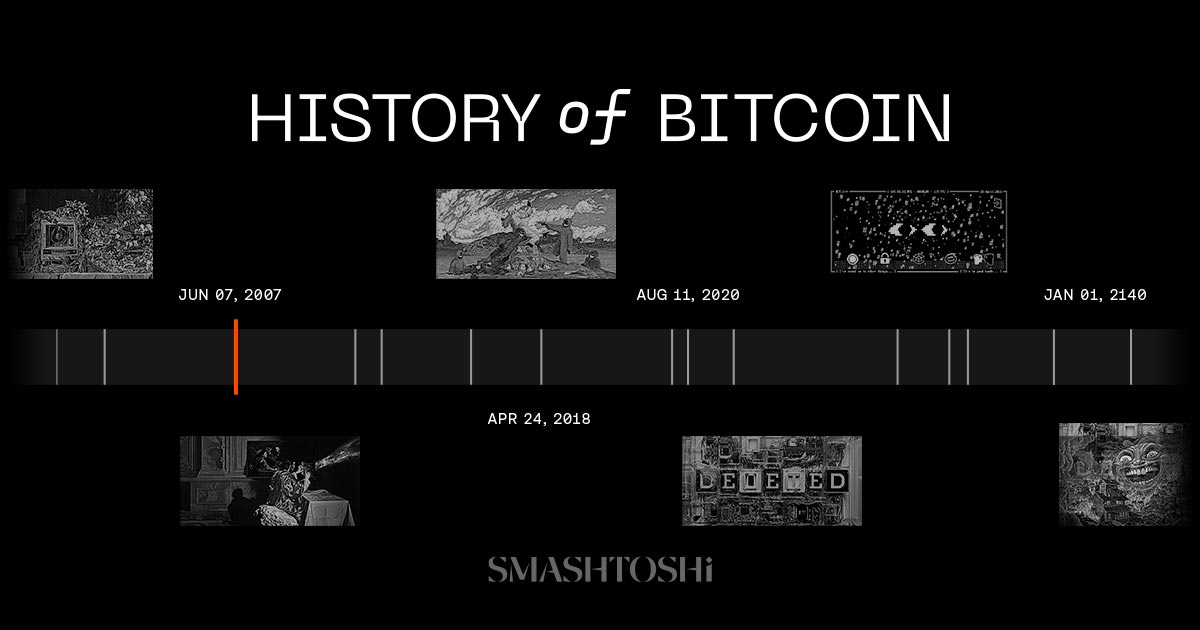
Own a piece of Bitcoin's history, 10% off
BIT: The History of Bitcoin tells bitcoin's story through 128 original artworks and more than 100 first hand accounts from people who were there, including Martti Malmi, Theymos and Jameson Lopp. The Genesis Edition is signed, numbered and limited to 256 copies.
Bitcoin Breakdown readers get 10% off with code BREAKDOWN until 25 October.

🇫🇷 French Regulators Want Crypto Platforms Held Liable
France's Treasury, central bank and two market regulators, the Financial Markets Authority (AMF) and the Prudential Supervision and Resolution Authority (ACPR), proposed that platforms be liable for certain client incidents when they facilitated access to DeFi protocols. Their response to the European Commission's crypto rules review also asks platforms to vet protocols before offering access, while self-custody wallet developers avoid blanket certification.
Why it matters: Liability turns every platform into a gatekeeper with an incentive to vet and restrict what clients can reach. Regulators will come for Bitcoin next, but self-custody leaves no intermediary to deputize, and the honey badger will be ready. Read more→
From Paris liability rules to Pretoria's border rethink...
🇿🇦 South Africa to Rewrite Its Bitcoin Border Rules
Finance minister Enoch Godongwana said National Treasury and the South African Reserve Bank will rewrite their draft rules on moving crypto assets across borders after thousands of comments. A revised second draft is planned for further comment, but Godongwana gave no timeline and did not say which provisions would change.
Why it matters: Months of industry pushback won a rewrite, not a repeal, so exchange controls still give the state permission over where your money goes. South African Bitcoiners need to stay alert, because self-custody lets your keys cross borders without asking a central bank. Read more→
From Treasury's redraft to a Toronto courtroom...
⚖️ Rodolfo Novak and Coinkite Hit With Ontario Suit
Ontario court records list Amir Reza Naderi as the plaintiff in a civil lawsuit against Coinkite, the Coldcard maker, and its founder and chief executive Rodolfo Novak. The Toronto case, filed in September and still active, is classified as an economic injury claim, and the only filing so far is a Statement of Claim that the record does not describe.
Why it matters: A lawsuit against a hardware wallet maker cannot touch keys you hold yourself, because self-custody leaves no vendor with your coins to freeze. Follow the docket rather than the headlines, since the case's merits have not been tested in court. Read more→



Kudzai Kutukwa, a Bitcoin writer and commentator, argues that ETFs, custodial exchanges, and bitcoin-backed loans recreate the paper gold system, warning that 'not your keys, not your coins' means custodial holdings sacrifice monetary sovereignty (Oct 21 | 8 min read).
Gigi, president and executive director of OpenSats, develops his Nostr client Feather entirely through voice prompts and AI agents, publishing updates via Zapstore and moving development off GitHub to Nostr-based tools while keeping final control over merges and releases (Oct 21 | 7 min read).
Bitkey, Block's bitcoin hardware wallet maker, explains how its multisig design eliminates seed phrases and never displays private keys, leaving nothing for screen interception attacks like the one reported against modified Ledger devices to capture (Oct 21 | 4 min read).
Michael Tanguma, co-founder and CEO of Onramp, argues that the Coinbase allegations expose Bitcoin's corporate governance gap, warning that corporate bitcoin adoption could stall until companies can show who controls funds, who approves withdrawals, and whether assets remain, urging multisig arrangements that spread control across independent regulated institutions (Oct 20 | 6 min read).
Zack Wainwright, research analyst at Fidelity Digital Assets, explains how bitcoin-focused perpetual preferred stocks could serve as a new demand catalyst for bitcoin, having raised over $7B to accumulate 135,979 BTC in a year, potentially unlocking vast potential within the $150T global fixed income market (Oct 20 | 8 min read).
Ron Paul, former US congressman and libertarian commentator, argues that tax cuts and growth cannot erase the US government's massive debt, since Congress spends new revenue, Fed monetization fuels inflation, and Trump adds more debt, while urging voters to reject socialism and corporatism for liberty (Oct 20 | 2 min read).
Eric Yakes, founder of investment firm Epoch, argues STRC can't hold par as preferred equity inside Strategy's capital structure and says an interest-paying, bitcoin-backed offshore stablecoin is the only viable path to real money (Oct 20 | 8 min read).
Frank Shostak, an Associated Scholar of the Mises Institute, argues that the Keynesian multiplier is dangerous nonsense, contending that government spending and monetary stimulus merely reshuffle existing wealth, deplete savings, and impoverish rather than multiply real output (Oct 19 | 6 min read).
MostroEuropa, a European Mostro coordinator operator, explains how 'hold invoices' on the Lightning network enable non-custodial escrow for P2P bitcoin trading, why liquidity remains the biggest obstacle for decentralized marketplaces, and why building on Lightning and Nostr still matters despite operational and payment risks (Oct 19 | 3 min read).
Allard Peng of Bitcoin For Corporations analyzes how Strive's SATS preferred stock, with its fixed cumulative 15% dividend, could trade above $100 par and let Strive issue shares at a premium to buy bitcoin, creating mathematically guaranteed Net Bitcoin Per Share accretion for common shareholders (Oct 21 | 6 min read).
Joakim Book, a writer and professional editor, reviews Luke de Wolf's 'Defending Bitcoin,' praising its ICS-grounded security framework while criticizing Chapters 11 and 12 for hyperbolic, virtue-signaling calls to filter arbitrary data and spam (Oct 20 | 9 min read).
George Ford Smith, a Mises Wire contributor and sound-money advocate, writes that the US Federal Reserve's fiat inflation machine erodes purchasing power across generations, contends that the 'stable prices' rhetoric masks wealth theft, and champions gold-backed currency and bitcoin-like hard caps as guardians protecting savers' futures (Oct 19 | 5 min read).
Wumbolover, in an article for Lightning News, breaks down Phoenix Wallet's self-custodial design, Acinq's automated channel management, and its 0.4% send and 1% receive fees, concluding that the trust-minimized mobile wallet suits beginners seeking Lightning self-custody without running a node (Oct 19 | 2 min read).
Fedi, developer of a Fedimint-based community custody wallet, explains how shared bitcoin wallets spread key control across trusted Guardians to eliminate single points of failure, avoid exchange and corporate custody risks, protect user privacy, and make secure savings instantly spendable over Lightning (Oct 15 | 5 min read).
Dennis Koch, in an article for Bitcoin Magazine, writes about Dutch artist Carlijn Kingma, journalist Thomas Bollen and researcher Martijn Jeroen van der Linden's 'The Waterworks of Money' project, which maps how banks create money, why asset inflation fuels inequality and whether bitcoin can reshape Europe's financial future (Oct 19 | 9 min read).
Daniel Lacalle, economist and author of 'Freedom, Equality and Efficiency,' warns that central banks cannot fix the sovereign debt bubble as QE and financial repression only mask fiscal irresponsibility, leaving citizens to pay it off through inflation, stagnant growth and higher taxes (Oct 15 | 5 min read).
David Puell, an analyst at ARK Invest, argues that quantum computing threatens roughly 35% of bitcoin supply via Shor's algorithm, urging early migration to post-quantum signatures like BIP-360's P2MR before 'Q-Day' arrives (Oct 14 | 26 min read).
Fedi also introduces Multispend, a group-based alternative to joint bitcoin wallets that lets up to 21 voters collectively approve withdrawals from shared funds (Oct 12 | 5 min read).

BTCPay Server, a self-hosted Bitcoin payment processor, urges operators to update its optional WooCommerce and WordPress Docker deployment immediately after critical PHP remote code execution vulnerabilities are disclosed.
Grandmatt Shop opens a $772 Circular Grant on Geyser to restock shelves in Tena Estate, Nairobi, where Nextgen Village kids spend their sats rewards. Owner David plans to forward 50,000 sats a week to the next local entrepreneur once cash flow allows.
Lightning Labs CTO Olaoluwa Osuntokun urges users of Bitcoin software lnd, btcd, tapd and litd to update binaries after an eMudhra certificate authority compromise enables man-in-the-middle attacks.
AQUA Wallet, a Bitcoin and Layer 2 wallet by JAN3, says Liquid Network pegs and swaps are now available again while Lightning-to-Liquid stays paused.
Bull Bitcoin, a Canadian self-custodial Bitcoin platform, restores Lightning Network payments and Liquid sidechain support in BULL Wallet, letting users convert L-BTC, or Liquid bitcoin, back to on-chain BTC.
Fold, a Nasdaq-listed bitcoin financial services app, launches Fold Reserve, requiring a $5,000 minimum balance to unlock higher bitcoin rewards on card spending, bill pay, and zero-fee trading.
Francisco Calderón, Mostro co-founder, announces version 2 of the peer-to-peer bitcoin trading app, which spreads orders across 11 nodes and Nostr relays for censorship-resistant Lightning Network trades without KYC checks.
Jeremy Rubin, creator of Bitcoin's CheckTemplateVerify (CTV) covenant proposal, prototypes Lightning Labs' LayerTree in Sapio, his covenant-focused Bitcoin scripting engine enabling shared UTXOs with constant-size unilateral exits.
ACINQ, developer of the eclair Lightning Network node software, releases version 0.14.5 with security hardening fixes after two responsible disclosures, warning that malicious nodes could exploit the flaws.
Developer Benjamen Keroack unveils a cost-bounded transaction filtering language in satd, a Rust-based Bitcoin node implementation, letting operators quarantine inscriptions and large OP_RETURN outputs while preserving consensus.
Braiins, a Bitcoin mining infrastructure firm, adds Balancing Rules to Controlflow, its fleet automation tool in Braiins Manager, pausing or resuming miners to hold site power within operator-set limits.
Vadim Anufriev, an OpenSats grantee developing rust-bitcoin tooling, launches stackwalk 0.1.0, a browser based Bitcoin Script debugger that compiles policies and miniscripts and steps through each spend path.
Grynvault Rebalance, an independently maintained macOS fork of self-custodial wallet Alby Hub, lets embedded LDK operators choose exact outgoing and returning channels for circular liquidity rebalancing.
Sats for Bots, an independent curated directory, lists tools that let AI agents pay and get paid over Bitcoin Lightning, including L402, Nostr Wallet Connect and ecash offerings.
Shashwat Vangani, a contributor to LDK Node, a Rust library for Lightning wallets, opens a draft pull request adding BOLT 12 recurring payments for automated subscriptions.
OpenReceive, an open-source checkout tool from Rizful, uses receive-only Nostr Wallet Connect codes so that a hacked merchant server cannot spend funds, responding to August BTCPay Server bugs that let attackers drain Lightning nodes.
Anagram by Ben Arc of LNbits is a free open-source Telegram alternative built on the Nostr and Iroh protocols, offering end-to-end encrypted direct messages, private and public groups, plus audio and video calls.
White Noise, a privacy-focused messenger built on the Nostr and Marmot protocols, releases updates adding opt-in link previews on iOS, on-device translation and 512 MB file uploads on Android, and faster group message syncing.
BlitzPerp features inverse perpetual futures that lock trader margin in Bitcoin statecoins, which are off-chain transferable outputs, and clears orders in verifiable 3-second batch auctions while openly admitting trusted elements.