Key takeaways
- Deutsche Bank is weeks away from launching bitcoin custody, according to a Reuters report quoting its corporate banking chief.
- Deutsche Bank plans to launch custody first in Germany, then expand into major Asian financial centers in 2027.
- Deutsche Bank manages clients' wallets and private keys, so its custody service is not self-custody for clients.

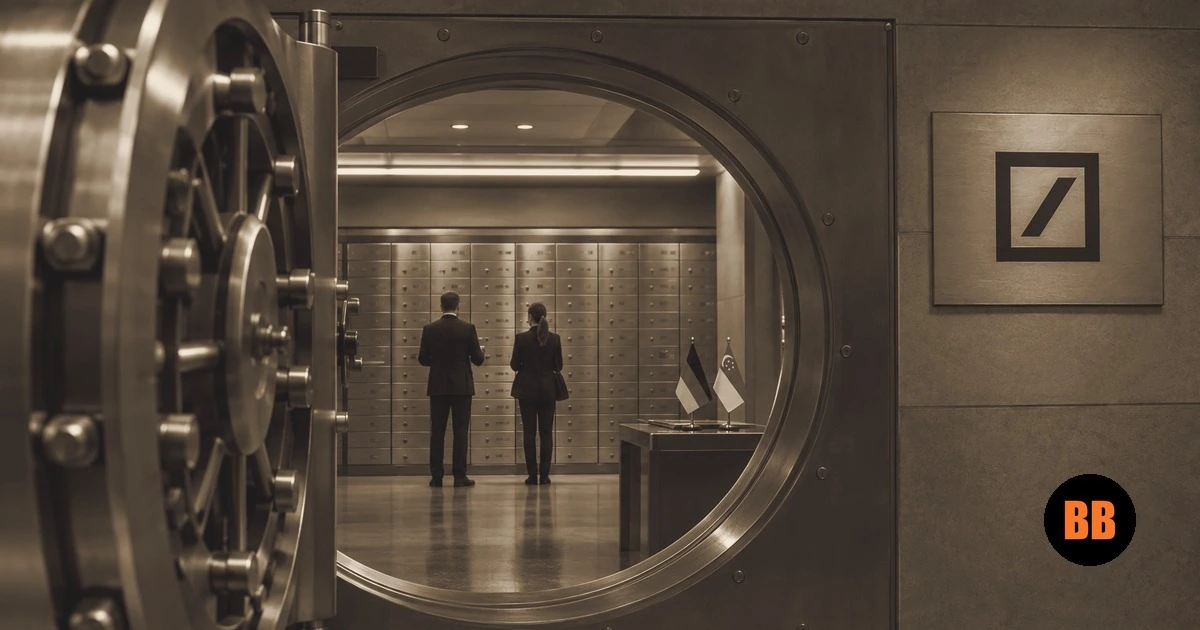
Deutsche Bank, Germany's biggest lender, is weeks away from launching its bitcoin custody service, according to a Reuters report that quoted the bank's corporate banking chief. Deutsche Bank plans to expand the custody platform into Asia next year.
Deutsche Bank first announced plans to debut a bitcoin custody service for European corporate and institutional clients in September. The service will launch first in Germany before expanding into major Asian financial centers in 2027, according to Reuters.
Who Holds the Keys
In Deutsche Bank's custody service, the bank manages clients' wallets and private keys. This is not self-custody, because the bank manages clients' private keys and clients rely on Deutsche Bank to move their coins. We see that as the detail that matters most: a client of the custody service holds a claim on Deutsche Bank, not bitcoin secured by private keys the client controls.
The custody service supports major digital assets such as bitcoin first, followed by stablecoin on- and off-ramp services. Deutsche Bank has not given a launch date for the custody service beyond the weeks-away timeline, and the custody launch remains subject to regulatory timelines.
Banks Converge on Custody
Deutsche Bank joins a long line of large banks. BNY Mellon, State Street, Standard Chartered, U.S. Bank and Citigroup have all committed to direct custody over the past 18 months. Citi and Standard Chartered have this year debuted or announced plans for bitcoin custody around the world.
That list covers US banks in BNY Mellon, State Street, U.S. Bank and Citigroup, a UK-headquartered global bank in Standard Chartered, and now Germany's largest lender, all converging on the same custody product, with Deutsche Bank's own Asia expansion planned for 2027. We read that as a demand signal: when US, UK-headquartered and German banks all commit to direct custody within 18 months, institutional demand for bitcoin custody is real.
Why It Matters
Deutsche Bank's custody service is not self-custody, because the bank manages clients' private keys, and that is the incentive story behind the rush into bitcoin custody. US banks, a UK-headquartered global bank and now Germany's largest lender are converging on the same custody product, which suggests institutional demand for bitcoin custody is real and spreading across the US, Europe and Asia. When the bank manages clients' private keys, every coin in its custody can be frozen or seized on someone else's say-so, which is how paper bitcoin creeps back into a system built to remove intermediaries. Institutions may want a custodian, but Bitcoin only delivers sovereignty to people who hold their own keys.