Key takeaways
- Thailand's Supreme Court rejects a defendant's argument that bitcoin has no value of its own in a robbery case.
- Attackers on Koh Samui force a victim to convert $50,000 into about 2.48 BTC and transfer it.
- A Bank of Thailand letter on legal tender does not stop bitcoin qualifying as property in the criminal case.

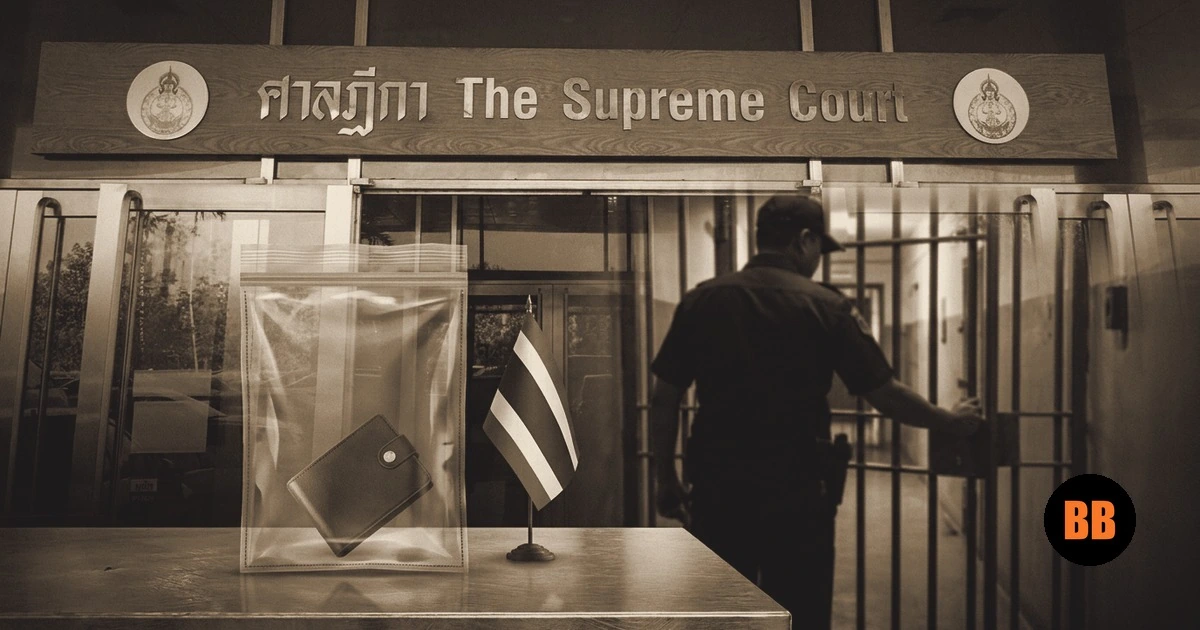
Thailand's Supreme Court ruled that bitcoin qualifies as property in a robbery case, rejecting a defendant's argument that it had no value of its own. The court upheld his 10-year prison sentence.
The convicted man was an accomplice who helped the robbers by arranging transport and accommodation for the group. The dispute turned on whether bitcoin could count as the property taken in a robbery.
A Robbery on Koh Samui
In 2022 on the island of Koh Samui, attackers threatened and assaulted a victim and forced him to convert $50,000 into about 2.48 BTC and transfer it to them.
The trial court sentenced the defendant to 15 years, then cut the term by a third to 10 years because evidence he provided was useful to the proceedings. The lower court ordered the bitcoin returned to the victim.
What the Court Decided
In a summary, the court said its plenary bench concluded that bitcoin has a market price, can be exchanged for cash when a buyer is available and can be held by members of the public. The court found that converting the victim's money into bitcoin did not remove its value or prevent it from being property:
"The value of the money transferred as property therefore fulfills the elements of an offense against property."
That language comes from a translation of the Thai-language summary. The judges cited Thailand's 2018 digital asset business decree, which defines cryptocurrency as electronic data created on a network for use as a medium of exchange.
The court also considered a Bank of Thailand letter stating that cryptocurrency is not legal tender. That status did not prevent bitcoin from qualifying as property in the criminal case. The court found that bitcoin's market value, ability to be exchanged for cash and capacity for individual ownership were sufficient to establish its status as property in the criminal proceedings.
Why It Matters
Thailand's Supreme Court reasoned from market price, cash convertibility and a 2018 decree, but we believe bitcoin is property whether a court or government declares it so or not. Bitcoin is the purest form of property ownership, backed by proof of work and by the keys you hold in self-custody, not by a Bank of Thailand letter or a judge's permission. The defendant's argument that it had no value of its own failed against a market price that needs no central bank to exist. The same principle applies to the state: confiscating bitcoin without the owner's consent is theft, even when the government does it.