Key takeaways
- Christine Lagarde will step down as European Central Bank (ECB) president on February 7, 2027.
- The European Council appoints her successor, with Klaas Knot and Pablo Hernández de Cos seen as leading contenders.
- Lagarde stays on record saying she is confident Bitcoin will not enter General Council central bank reserves.

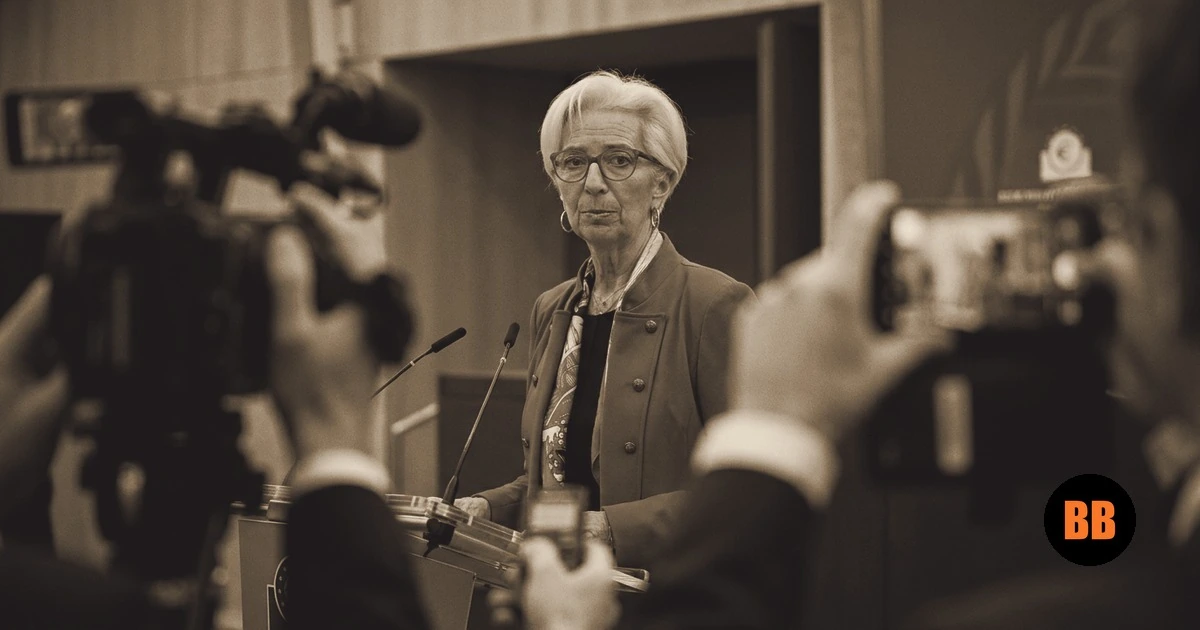
European Central Bank (ECB) President Christine Lagarde announced she will step down on February 7, 2027, nearly nine months before her term was due to end in October 2027. She remains president until that date, and Klaas Knot and Pablo Hernández de Cos are seen as leading contenders to replace her.
Lagarde made the announcement in a post on X:
"I have just informed my colleagues that I will step down as @ECB President on 7 February 2027."
Why She Is Leaving Early
At a press conference following the ECB's October interest rate decision, Lagarde confirmed she was moving her departure forward because she wanted more freedom to express political opinions.
"The reason I'm anticipating the end of my term by leaving in February 2027 instead of October is, as I have said to colleagues, members of staff and governors, is because I want to have the freedom of speech, the freedom of expression and the freedom to engage on matters that are not monetary policy matters."
Lagarde said that as ECB president she was under the "constraint" of an "obligation of neutrality." She added that this is the price paid for being independent:
"We don't get out of that mandate, because that's the price we pay for being independent."
Who Picks the Next ECB President
Her successor will be appointed by the European Council following the nomination process outlined in Article 283 of the Treaty on the Functioning of the European Union. That process requires a recommendation from the Council after consulting the European Parliament and the ECB.
Klaas Knot is a former Dutch central bank chief, and Pablo Hernández de Cos is general manager of the Bank for International Settlements. Her successor will be chosen as the ECB faces other leadership changes, with chief economist Philip Lane and board member Isabel Schnabel also due to leave next year.
A Vocal Bitcoin Critic
Lagarde has been a vocal critic of Bitcoin. During a press conference in January 2025, she said central bank reserves need to be liquid, secure and safe, and that she was "confident" Bitcoin would not enter the reserves of any of the central banks of the General Council.
Why It Matters
Lagarde has been a vocal critic of Bitcoin, yet her departure changes nothing for savers, because whoever takes charge next will still affect how the euro functions as a currency. That choice sits with the European Council, not with the people holding euros, which is how fiat money has always worked: a small circle appoints the people who set the terms of your savings. Bitcoin continues to function as it always has since inception, with no president to replace, no successor to lobby and no central bank to ask for permission. We think that is one of the biggest differences between Bitcoin and the euro, and the reason savers should keep their reserve in money that answers to no council.