Key takeaways
- Coinkite's postmortem says no Coldcard was hacked and thieves rebuilt private keys offline from weak seeds
- Galaxy Research attributes more than 1,778 BTC stolen from more than 8,600 addresses to the exploit
- Coinkite says at least 15 independent review efforts and 54 firmware contributors missed the seed-generation defect

Coinkite Says No Coldcard Was Hacked
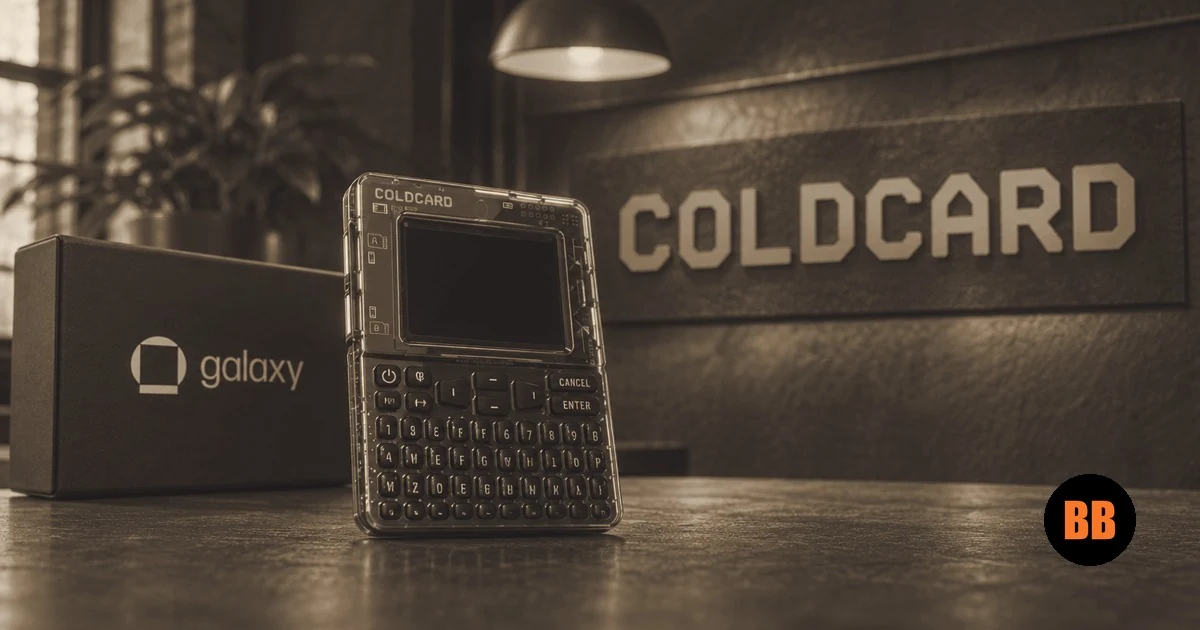
Coinkite published its full Coldcard seed-generation postmortem, which says no device was hacked and thieves rebuilt keys offline from weak seeds. Coinkite's blog says every theft was carried out offline by regenerating affected private keys, and no Coldcard was remotely accessed or taken over.
Galaxy Research attributed more than 1,778 BTC stolen from more than 8,600 addresses to the exploit. That Galaxy figure is not final, and other analysts have cited figures ranging up to approximately 1,816 BTC. Coinkite counts 300 loss-related tickets from 236 customer accounts and says the true number of affected customers is likely higher.
Fifteen Reviews and 54 Contributors Missed the Defect
Coinkite says at least 15 independent review and security-research efforts covered Coldcard hardware, firmware, entropy tooling and release controls, and none identified the defect. Coinkite says scopes varied, and many of those efforts were not full firmware audits. That record cuts against the comfortable idea that published code is reviewed code. Its source code was public throughout, with 54 contributors to the firmware repository. Independent security researcher Rob Hamilton also reviewed Coldcard firmware with the OpenAI Cybersecurity Harness, and that review produced 85 candidate findings without identifying the seed-generation defect. A separate Keylabs review covered Mk5 and Q firmware only, and Edge releases were excluded.
Coinkite says the seed generator mixes a microcontroller's random number generator with two secure elements. A firmware setting switched that hardware source off, and a safeguard in Coinkite's libNgU code library failed to catch it. Estimates put the remaining entropy at about 40 bits on Mk2 and Mk3 devices and about 72 bits on Mk4, Mk5 and Q, though the 72-bit figure has not been independently established. The flaw was only detectable through careful static analysis of the build configuration itself. It means a careful reader of the build files could have found it, yet none of the reviewers did.
Coinkite Has No Compensation Decision Yet
Coinkite has no decision yet on whether to compensate affected customers, one of three of the report's 15 recommendations that remain open. Its blog says the company is still evaluating every option to help affected customers. Coinkite says it will keep shipping code users can inspect and builds they can reproduce. Its firmware license adds a Commons Clause condition that removes the right to sell the software or a product or service whose value derives entirely or substantially from it.
Why It Matters
This bug sat in public code for anyone to read, which shows that open-source visibility alone never guarantees real verification. That takes adversarial reviewers with a reason to dig, and a license that restricts selling products built on the firmware dulls the incentive for outsiders to fork, maintain and attack the code. That is also why Bitcoin itself, which anyone can copy, run and challenge without asking permission, draws the scrutiny it does. If hardware makers want the trust that Bitcoin's open-source culture earns, they should accept the same terms and let rivals profit from finding their mistakes.