Key takeaways
- Former UK prime minister Liz Truss endorsed Bitcoin as a response to sterling debasement and Britain's structural economic stagnation
- Truss served 45 days as PM in 2022 and blames currency debasement and lost monetary debate for Britain's decline
- She frames Bitcoin as one pillar of resistance to centralization, high taxation, and expanding state control over the economy

A Former Insider Breaks With the Fiat Script
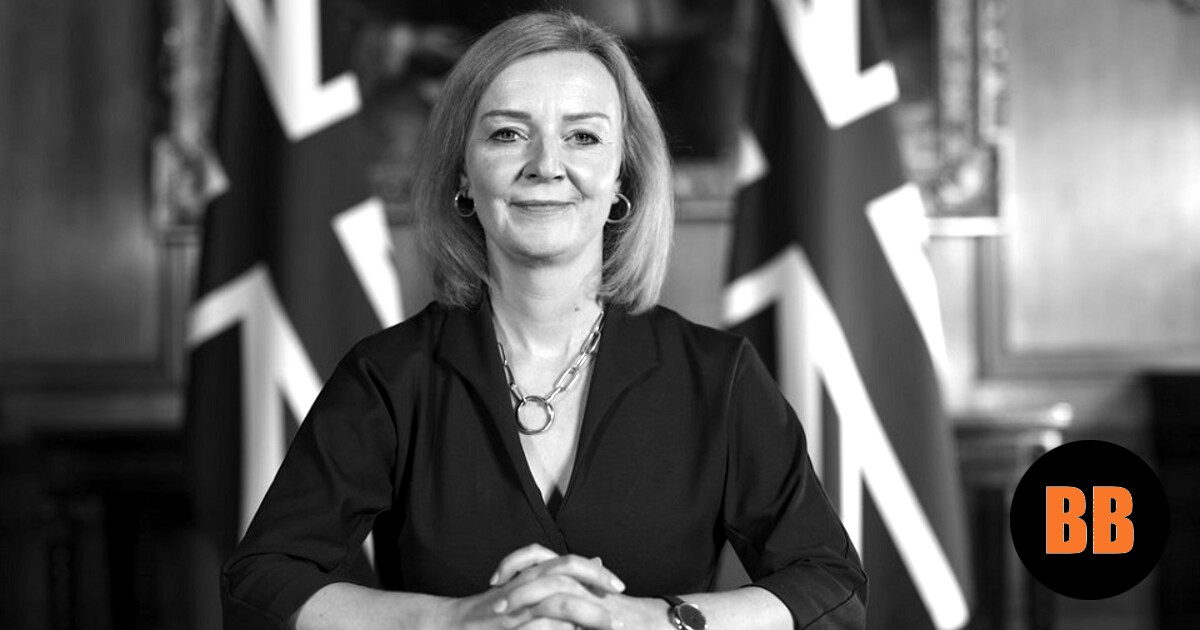
Liz Truss, who served as UK prime minister for 45 days in 2022 before her economic program collapsed, publicly endorsed Bitcoin as a response to Britain's structural monetary problems. Speaking through her CPAC UK political movement, Truss framed Britain's future starkly: end, or change. Her diagnosis of the cause is direct: decades of sterling debasement, inflation, and excessive money printing have eroded purchasing power and gutted the incentive structures that produce real growth.
'A lot of our problems stem from currency debasement and the absence of sound money. Serious discussion about money has disappeared in academia and government.'
Truss traces her first exposure to Bitcoin debates to her time as Chief Secretary to the Treasury, a post she held until July 2019. She frames her support not as investment enthusiasm but as a structural response to monetary failure.
The Diagnosis Fits the Data
Britain's economic record since 2010 supports the stagnation framing. The pound has lost purchasing power over that period, while households absorbed repeated inflation shocks in energy, housing, and everyday goods. Growth has consistently lagged G7 peers. Truss argues that high taxes, heavy regulation, and rising energy costs have combined with currency erosion to eliminate incentives for entrepreneurial risk-taking.
Her critique of the system is pointed: it is designed to tighten centralized control through regulation rather than to generate genuine prosperity. Bitcoin, in her framing, represents one pillar of resistance to that trend. She is not the first UK political figure to identify sound money as a response to monetary mismanagement, but she is the most senior to do so publicly and explicitly.
What Makes This Signal Different
Former prime ministers do not typically endorse alternative monetary systems. Political instinct is to defend the existing architecture, because that architecture is what gives governments the ability to finance deficits, backstop banks, and respond to crises through money creation. When someone who sat at the top of that system calls the system itself the problem, the signal is qualitatively different from retail investor enthusiasm or venture capital positioning.
Truss's tenure ended badly, in large part because market reaction to her economic program exposed the limits of what a government can do when bond markets decide the math does not work. That experience makes her critique more credible than the usual outsider complaint. She was not making an abstract argument. She saw the constraint operate in real time.
Why It Matters
Truss matters here for one reason: she is not some commentator discovering Austrian economics in retirement. She sat near the top of the machine and came away saying the machine is the problem. She also serves as a cautionary detail. Diagnosing fiat failure is easier than escaping it from inside a debt-soaked political system, and she proved it. Her government lasted 45 days. The bond market ended her program before Parliament could. That does not weaken the Bitcoin case. It strengthens it. When the person who ran the seventh-largest economy says the system is broken and Bitcoin is a response, the sound money argument stops looking like a fringe meme and starts looking like an indictment.