Key takeaways
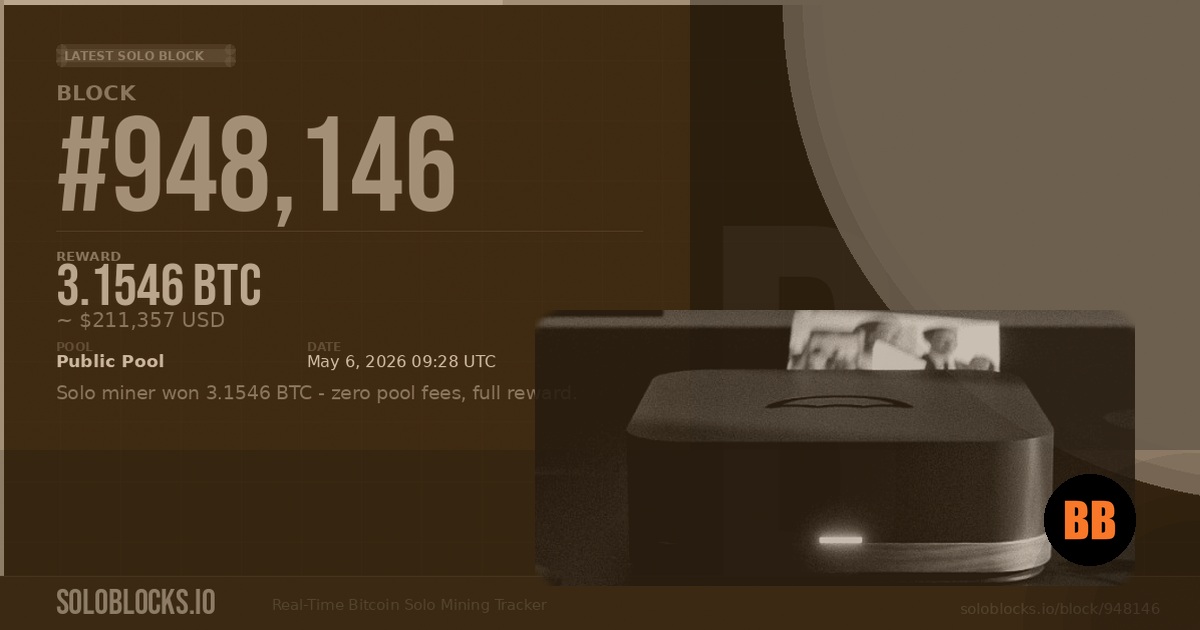
- SoloBlocks(dot)io lists block 948,146 as a 3.1546 bitcoin Public Pool solo win.
- The tracker identifies the winning miner as an Umbrel Node and home miner.
- SoloBlocks(dot)io shows 231 tracked solo blocks and another solo win earlier this month.

One Address Got The Whole Block
A solo miner appears to have won block 948,146 and claimed the full 3.1546 bitcoin reward, according to live tracking from SoloBlocks(dot)io. Umbrel highlighted the find after the tracker labeled the winner an Umbrel Node on Public Pool, with the reward shown at roughly $258,638 when the page was captured.
The block landed on May 6 at 09:28 UTC. SoloBlocks(dot)io listed the difficulty at 132.5 trillion, the payout address as a single coinbase recipient, and the pool as Public Pool. That does not tell us the exact hardware, but it does tell us the most important part: one miner, one address, one full block reward.
Self-hosted solo miners get the full 3.125 BTC.
SoloBlocks(dot)io puts the solo-mining premise bluntly in its explainer. The tracker distinguishes home miners from large operations, small farms, rented hash, and fee-charging solo pools. In this case, the latest find carried the labels Umbrel Node, Lucky Solo, and home miner, which is exactly why the story caught Bitcoiners' attention.
Variance Is Brutal Until It Pays
Solo mining is not a steady income strategy. It is variance with a power cord. A miner with tiny hashrate can point hardware at a solo pool for years and find nothing, while another setup submits the winning share and takes the whole block. That is not fairness in the emotional sense. It is probability enforced by the network.
SoloBlocks(dot)io says it has tracked 231 solo blocks and more than 1,326 bitcoin won across those finds. Its latest history also showed another solo block on May 4, when block 947,911 paid 3.1480 bitcoin through NiceHash EasyMining. The site classifies some wins as industrial, some as rented hash, and some as genuine home-miner events. The mix matters because it keeps the romance honest.
Umbrel Makes The Stack Legible
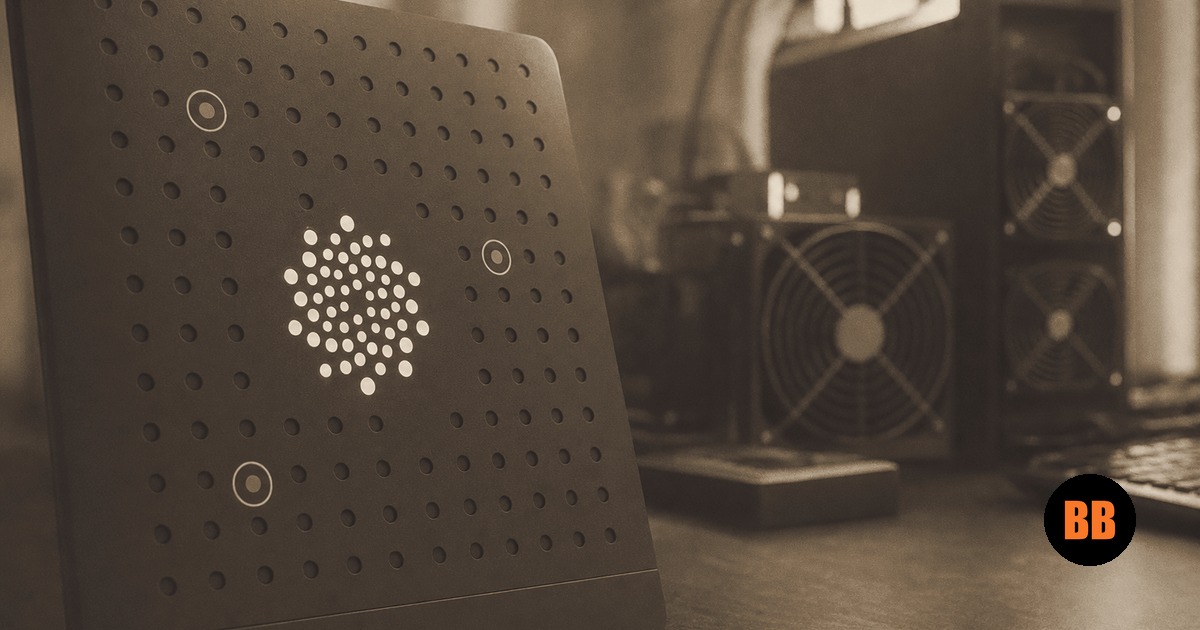
The Umbrel angle is less about a branded dashboard and more about the home-stack pattern. A Bitaxe, NerdQAxe, or small ASIC still needs a node, mining software, and a way to point hash at the network. Umbrel has made that stack easier for non-enterprise users to run at home.
That does not mean solo mining is suddenly easy money. It means more people can participate in the lottery without asking a hosted provider to hold their hand. There is a difference between expecting yield and choosing to touch the protocol directly.
The practical shift is access. A home user can now combine a node, small miner, and solo-pool setup without needing the tooling literacy of an industrial mining desk. The odds remain savage, but the path onto the field is less mysterious.
Why It Matters
Industrial mining dominates hashrate, and that is not changing because one home miner got lucky. But Bitcoin's magic has never been that everyone has equal odds. The magic is that anyone can play by the same rules. A home node tied to a small miner can still submit a valid block and get paid by consensus, not by permission. That is the sovereignty lesson hiding inside the jackpot headline.