Key takeaways
- BlackRock digital assets head Robbie Mitchnick tells the Digital Asset Summit most tokens are short-lived nonsense
- Institutional investors have narrowed sharply to Bitcoin and Ether, dismissing the broader token market as speculative churn
- Mitchnick frames AI as crypto's real long-term driver, calling it computer-native intelligence paired with computer-native money

'The Majority of That Is Nonsense'
BlackRock's head of digital assets Robbie Mitchnick delivered a blunt assessment of the token market at the Digital Asset Summit in New York on March 24. Token turnover among leading projects has been "quite intense," Mitchnick said, with only Bitcoin and Ether maintaining stable positions. As for the rest: "The majority of that is nonsense."
The remark reflects a broader pattern among institutional investors. Large allocators are no longer experimenting with diversified token portfolios. They have concentrated holdings on a narrow range of assets, with Bitcoin at the center. BlackRock's own iShares Bitcoin Trust (IBIT) has grown into one of the most successful exchange-traded fund (ETF) launches in history, reinforcing the thesis that institutions see Bitcoin as the asset, not one of many.
Mitchnick's framing stopped short of full maximalism. He included Ether alongside Bitcoin as an institutional-grade asset, a distinction that a Bitcoin-only publication would contest. But the directional signal is clear: the era of institutional interest in long-tail tokens is over before it began.
AI as the Real Catalyst
Beyond dismissing most tokens, Mitchnick argued that artificial intelligence represents a more powerful long-term force for the industry than the proliferation of new tokens ever could.
His logic was structural. AI agents, he argued, will not use traditional banking infrastructure like Fedwire and SWIFT. They will need programmable, permissionless, globally accessible money. Mitchnick framed it as a natural pairing: "Crypto represents computer-native money while AI represents computer-native intelligence."
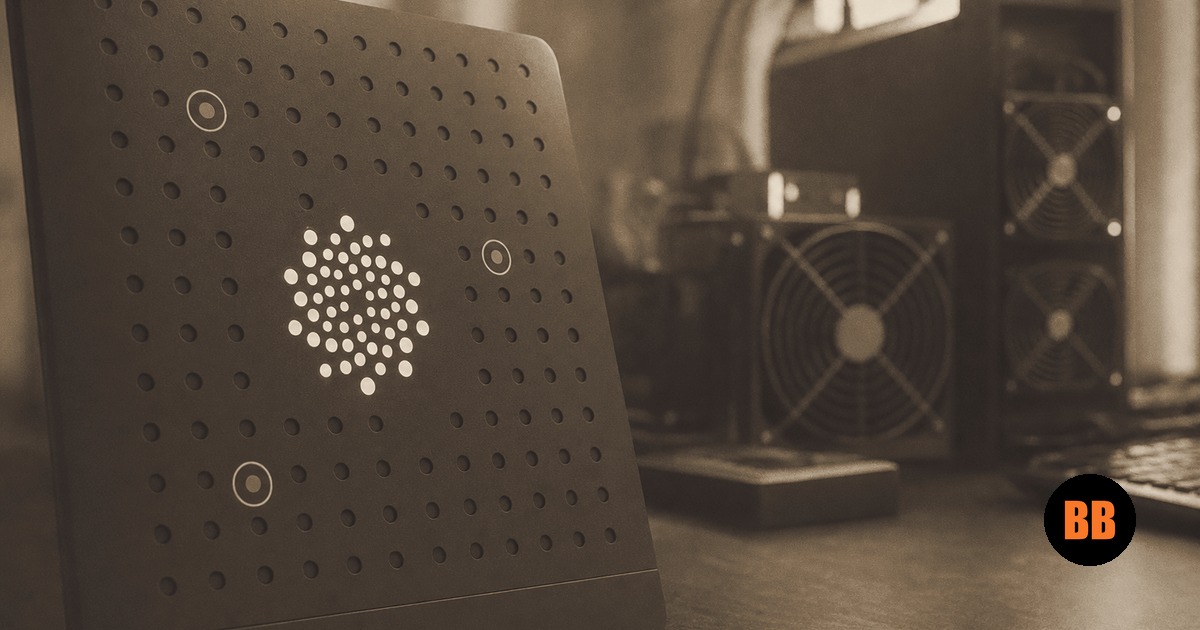
The thesis has practical backing. Bitcoin miners including Hut 8, Core Scientific, and Iren are already repurposing data center capacity for AI and high-performance computing workloads, citing steadier revenue streams and growing demand for processing power. The convergence of energy-intensive Bitcoin mining infrastructure with AI compute demand creates a supply-side bridge between the two industries that did not exist five years ago.
Getting Closer, But Not There Yet
Mitchnick positioned Bitcoin as a diversifier during periods of rapid technological disruption, framing it less as a speculative asset and more as infrastructure for AI-driven economies. That framing is closer to the Bitcoiner thesis than most institutional commentary gets, but it still misses a step.
The argument that machines need "computer-native money" is correct. What Mitchnick has not yet articulated is the conclusion: when AI agents evaluate monetary networks on their own, without regulatory capture, brand loyalty, or influencer endorsement, they will verify the code. They will compare issuance schedules, consensus mechanisms, and decentralization metrics. The output of that evaluation is not "Bitcoin and Ether." It is Bitcoin.
Why It Matters
BlackRock managing approximately $14 trillion in assets calling the token market "nonsense" is not a fringe opinion anymore. It is the institutional consensus crystallizing in real time. The fact that they still pair Ether with Bitcoin shows they are not all the way there, but the direction is unmistakable: institutions are narrowing, not broadening. Machines will narrow further and faster. AI agents do not care about venture capital narratives, token launch hype cycles, or which project has the best marketing. They process inputs and optimize for the best monetary protocol. When that evaluation runs at scale, the answer will be the same every time.