Key takeaways
- ERCOT tracks roughly 438,000 megawatts of large-load requests, with data centers representing nearly 90% of the queue.
- ERCOT's Batch Zero framework evaluates projects together to identify interactions, transmission upgrades, and system constraints more efficiently.
- Bitcoin miners gain valuable grid positions after securing power, curtailment agreements, and interconnection rights before artificial-intelligence demand surges.

Texas Tries To Batch The Bottleneck
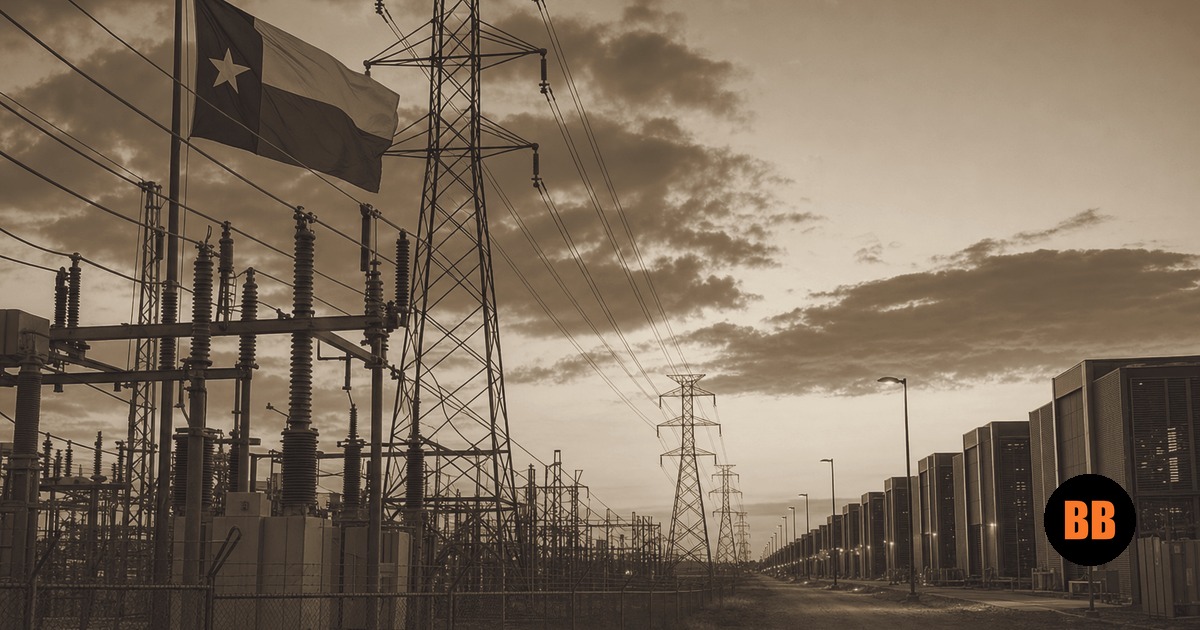
Texas grid planners are changing how large loads enter the power system after an enormous queue of projects piled up in ERCOT's connection process. The old method reviewed requests one by one. The new Batch Zero framework evaluates groups of projects together so ERCOT can study interactions, transmission upgrades and system constraints in a more coordinated way.
That sounds like process reform, and in a narrow sense it is. But the scale is the real story. ERCOT has been tracking roughly 438,000 megawatts of large-load requests, with data centers making up close to 90% of the queue. That is not a normal scheduling hiccup. It is a collision between scarce transmission capacity and a wave of AI power demand that wants grid access now.
The Queue Is The Price Signal
In a market with clear property rights and direct capital discipline, scarce capacity gets allocated by price, build cost, risk and profit. Texas instead has a socialized transmission system where access is mediated by regulators and grid operators. Costs can be pushed across ratepayers, and the signal for where new capacity should be built becomes a bureaucratic queue rather than a profit-and-loss statement.
That is why batch evaluation is only a patch. It may be more efficient than handling every request in isolation, but it does not solve the deeper allocation problem. If 438,000 megawatts of projects are asking for interconnection, the hard question is who pays, who waits, and who gets rationed. A queue can order the line. It cannot reveal the highest-valued use of scarce transmission.
Miners Got There First
Bitcoin miners are the accidental winners. They are not winning because regulators suddenly love mining. They are winning because they spent the last cycle building sites, negotiating power, learning curtailment and connecting to the grid before AI data-center demand turned every megawatt into a strategic asset. The infrastructure that looked speculative when hashprice was weak now looks like optionality.
That optionality can be monetized in two ways. A miner can keep mining when economics make sense, or it can convert capacity and interconnection rights into data-center infrastructure for AI customers. Either way, the key asset is not just machines. It is position in the grid queue. The firms that paid for that position early now have something the new data-center crowd cannot instantly replicate.
Why It Matters
The policy mechanism is cost socialization. When regulators ration grid access and socialize transmission costs, every large-load boom becomes a political fight over who receives capacity and who absorbs the bill. FERC's parallel push for regional grid operators to prove data-center costs are not being shifted to households is the same problem showing up outside Texas.
Bitcoin mining keeps demonstrating a lesson its critics miss. Flexible load is not just electricity consumption. It is a way to finance infrastructure, absorb volatility and create optionality before other demand arrives. The irony is rich: miners were blamed for stressing grids, yet the miners that built early may now be better positioned than AI firms waiting in line for permission from the grid bureaucracy.