Key takeaways
- SBI Crypto closes its public mining pool July 31 after five years, providing no official reason.
- SBI Crypto's pool represents about 21.46 EH/s and 2.24% of global hashrate before its scheduled shutdown.
- Bitcoin miners can redirect hashrate to competing pools while difficulty adjustment continues preserving network block production.

The Pool Is Closing
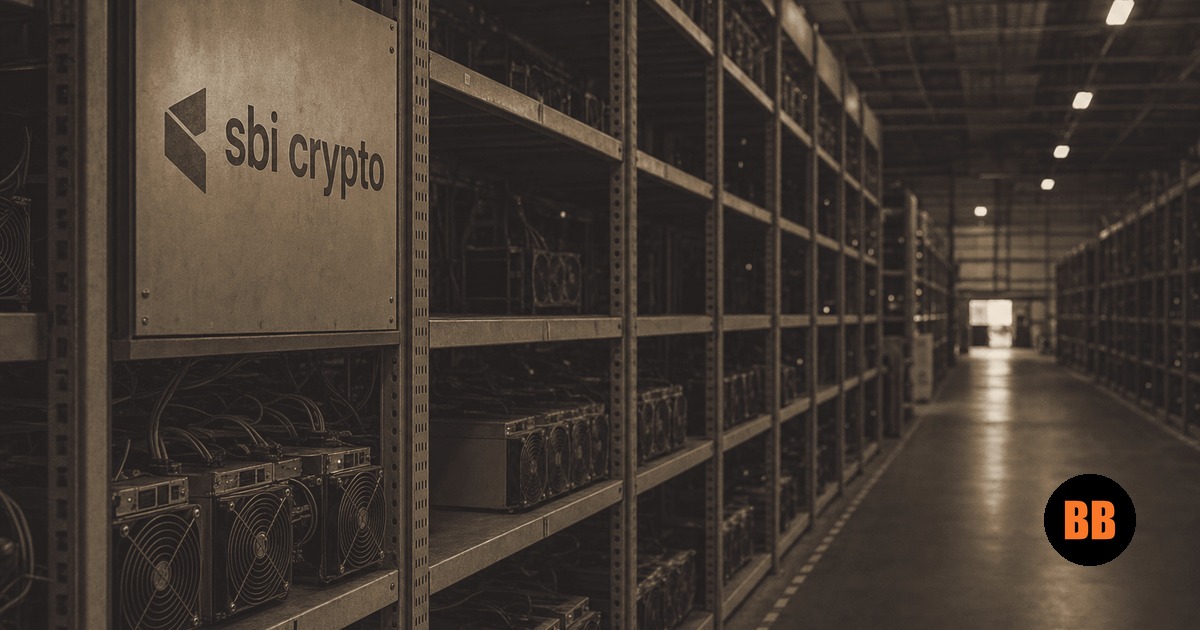
SBI Crypto's mining-pool shutdown will take effect on July 31, ending a five-year run for the public-facing pool. SBI Crypto is the mining arm of SBI Holdings, one of Japan's large financial conglomerates, and the company told miners to keep submitting shares through the cutoff so final payout calculations remain complete.
No official reason was given. The pool is not a rounding error, but it is also not a consensus pillar. Recent public rankings put it near 21.46 EH/s, around 2.24% of global hashrate, behind the largest pools and alongside a long tail of alternatives.
That size makes the closure visible without making it systemic. A miner losing a payout venue has operational work to do, but the protocol does not distinguish between SBI hash, independent hash, or hash pointed through another pool tomorrow.
SBI Is Not Leaving Bitcoin's Orbit
The timing is useful because SBI Holdings is expanding elsewhere in the industry. The same parent company has been moving toward a Bitbank acquisition and stablecoin partnerships, which makes the mining-pool closure look less like a retreat from digital assets and more like a portfolio decision inside a diversified financial group.
That distinction matters. SBI can shut one mining service, grow an exchange business, pursue payment rails, and still change nothing about Bitcoin's block-production rules. Corporate strategy moves around Bitcoin. It does not rewrite Bitcoin.
The story is therefore not SBI disappearing from the industry. It is a finance group choosing where it wants exposure and where it no longer wants operational drag. That is ordinary corporate pruning, not evidence that Bitcoin's mining market has lost a foundation. Miners still care about uptime, payout method, fees, template policy, and variance, so they can re-price the service without changing the monetary network underneath it.
'the logo leaves, the hash moves'
The Network Absorbs The Exit
A mining pool is a coordination layer. It aggregates hashrate, smooths revenue for miners, builds or relays block templates, and distributes payouts. If a pool closes, miners redirect machines to another pool or mine through another arrangement. The network does not ask which corporate logo used to sit above the dashboard.
This is the boring resilience that matters most. Hashrate migrates, difficulty keeps adjusting, and blocks keep arriving roughly every ten minutes. Pool concentration can still be a centralization risk, especially around transaction selection, but one pool's exit is not a protocol crisis.
Why It Matters
For Bitcoiners, the lesson is that mining infrastructure is not the same thing as Bitcoin itself. The mechanism is incentive compatibility. Miners chase revenue, pools compete for hashrate, and the difficulty adjustment absorbs changes in available power over time. A financial conglomerate can decide a pool is no longer worth operating without gaining any special veto over the chain.
That does not mean pool politics are irrelevant. Transaction-selection power and template construction still matter. But SBI's shutdown shows the difference between a service provider leaving a market and a network failing. Bitcoin's base layer keeps working because consensus is not housed inside any company's mining brand.