Key takeaways
- Supreme Court rulings expand presidential removal power while allowing Federal Reserve Governor Lisa Cook to remain temporarily.
- Federal Reserve independence shields monetary decisions from voters without separating policy from Treasury debt-management pressures.
- Bitcoin removes committee discretion from monetary supply, leaving no chair or emergency meeting capable of expanding issuance.

The Court Fight Is The Decoy
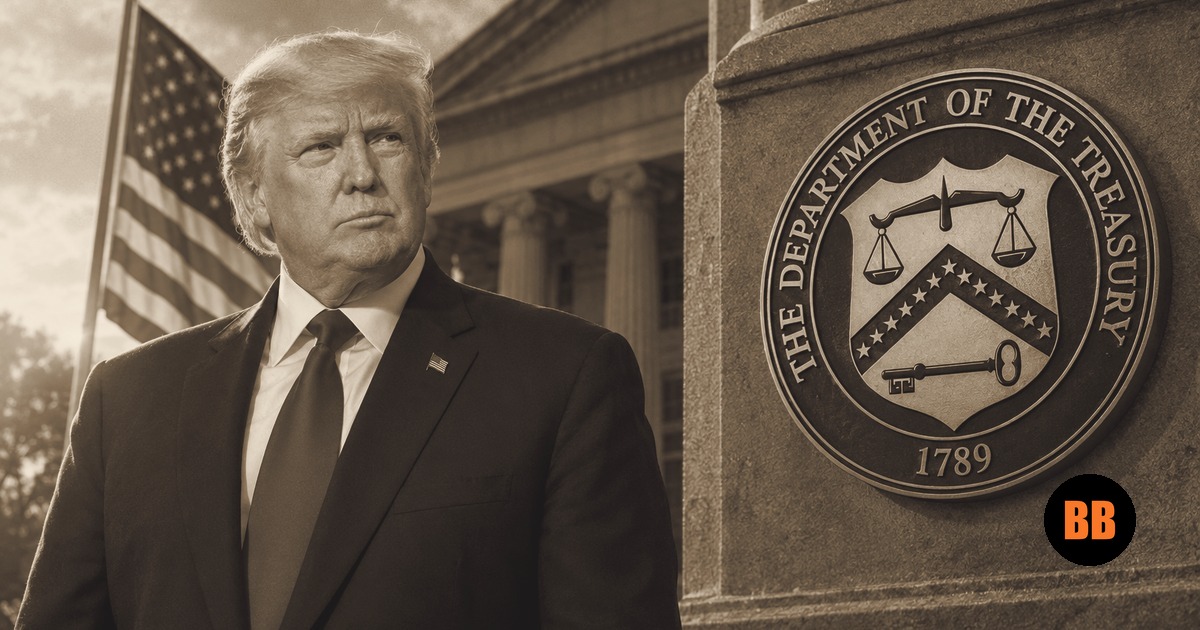
The latest Fed independence fight turns on two Supreme Court rulings issued on June 29, 2026. In one, the Court backed broader presidential removal power over independent agencies. In another, it let Federal Reserve Governor Lisa Cook remain in place while leaving the deeper constitutional question around Fed independence open.
That is enough to restart the familiar argument. One side warns that presidential control would turn monetary policy into a campaign tool. The other side notes that an unelected central bank already exercises enormous public power while pretending to float above politics. Both concerns are true enough. They are also incomplete.
'who controls the printer is not the root question'
Independence Serves Someone
The Federal Reserve was created in 1913 with a deliberately hybrid structure: regional banks with private capital, a Board of Governors appointed by the president, and a public mandate wrapped around a banking cartel. Calling that independent has always required a little theater.
The Fed is independent from direct voter control, not from the financial system it manages or the Treasury market it helps sustain. When public debt grows large enough that higher rates threaten the fiscal machine, monetary policy becomes debt management by another name. Independence then means the printer serves permanent institutional needs instead of short-term electoral needs.
The Printer Is The Problem
This is the trap in the mainstream framing. If the president dominates the Fed, money creation bends toward political survival. If the Fed stays insulated, money creation bends toward banks, dealers, sovereign-debt buyers, and the state that borrows in its own currency. The individual holding dollars is never the protected party.
The central bank debate therefore concedes too much from the start. It asks which group should control credit expansion, liquidity backstops, emergency facilities, and the unit of account. Bitcoin asks a cleaner question: why should any committee have that power over everyone else's savings?
This is why independence rhetoric can be so slippery. It sounds like a shield for ordinary people against political manipulation, but it can also shield the monetary bureaucracy from direct accountability. The saver is asked to trust that inflation, asset purchases, swap lines, and bank rescues are technical necessities rather than wealth transfers with winners and losers. That trust is the product itself.
Why It Matters
For Bitcoiners, the lesson is not that Trump control would be uniquely dangerous or that Fed independence is uniquely virtuous. The mechanism is deeper. A fiat system needs a printer, a committee, and a political story that explains why dilution is responsible policy. Changing who sits closest to the machine does not change what the machine does.
Bitcoin matters because it removes that administrative lever from the monetary base. There is no chair to pressure, no governor to protect, no emergency meeting that can expand supply for banks or deficits. The Fed fight is useful only if it wakes people up to the bigger problem: money ruled by discretion is money ruled by somebody else.