Key takeaways
- Florida's HB 505 creates crypto-kiosk registration, warning, receipt, transaction-cap, recordkeeping, and conditional refund requirements beginning in 2027.
- Florida caps new kiosk customers at $2,000 daily and existing customers at $10,000 daily starting January 2027.
- Florida requires first-transaction refunds within 72 hours when customers timely report alleged fraud and provide official proof.

Florida Makes The Operator Eat First Loss
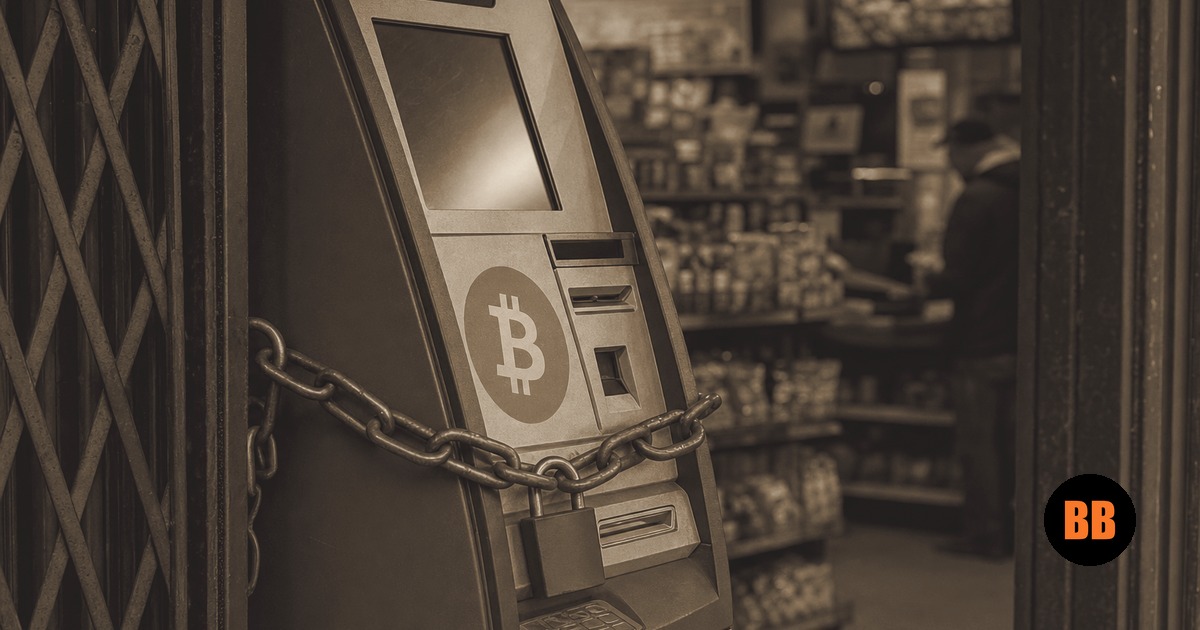
Florida's new crypto ATM law turns fraud prevention into an operating-cost test for kiosk companies. HB 505, now Chapter 2026-178, creates a virtual-currency kiosk regime with registration, warnings, receipts, daily transaction caps, compliance records, and a conditional refund right.
Most of the law takes effect January 1, 2027, with the operating-registration gate arriving March 1, 2027. New customers are capped at $2,000 per day, existing customers at $10,000, and operators must provide transaction receipts that include the hash, wallets, fees, exchange rate, liability statement, and refund policy.
The hardest change is the refund rule. A kiosk business must issue a full refund within 72 hours for a customer's first kiosk transaction if the customer reports alleged fraud to the business and to law enforcement or another government agency within 60 days and provides proof such as a police report or notarized affidavit.
The Fraud Is Real
Nobody serious should minimize the damage. FBI IC3 data cited in the policy debate points to 13,460 complaints involving cryptocurrency kiosks in 2025 and nearly $389 million in adjusted losses. Florida alone recorded 1,213 complaints and $32.8 million in adjusted losses tied to the same category.
Older victims are hit especially hard. The FBI's 2026 kiosk warning says people over 50 accounted for more than half of the 2025 complaints and more than $302 million in reported losses. The scam pattern is ugly: government impersonation, tech support fraud, extortion, investment schemes, and pressure to move cash fast.
'fraud is the pretext, custody is the destination'
The Remedy Is Asymmetric
The problem is that the same scam scripts run through wire transfers, bank payments, gift cards, gold couriers, and prepaid cards. Those rails usually get warnings, liability rules, and education campaigns. Bitcoin kiosks increasingly get caps, bans, registration gates, and operator refund exposure that can make the business uneconomic.
Tennessee's statewide ban took effect July 1, 2026. Georgia's new rules require caps, warnings, reporting, and some refunds. Indiana already moved first, Minnesota is heading into enforcement, and other states are considering similar restrictions. The policy pattern is no longer hypothetical.
That does not mean every kiosk operator deserves sympathy. Some machines charge brutal spreads, provide poor disclosures, or sit in locations where vulnerable people are easy targets. But a bad operator model is not the same as a principled reason to eliminate cash access to Bitcoin. Policy should punish fraud and negligence without making self-custody harder for everyone else.
Why It Matters
For Bitcoiners, the issue is not whether fraud victims deserve protection. They do. The mechanism is whether protection becomes the language used to close one of the few remaining cash-to-Bitcoin bridges. A kiosk is messy, expensive, and imperfect, but it lets a person turn physical cash into Bitcoin without starting inside a brokerage or bank account.
When that bridge disappears, the default route is Coinbase, an ETF, a bank product, or another corporate interface. That means KYC, surveillance, frozen accounts, account closures, reporting thresholds, and custodial permission. Every closed ATM narrows Bitcoin access toward platforms that regulators and banks can supervise, pressure, and eventually weaponize, weakening self-custody at the policy layer.